





Technical files
Documents
Specifications and installation information can be viewed or downloaded as PDFs from our server.
Technical specifications
2Certificates
1Videos
Key technical specifications
The most critical technical parameters of this product.
- Mains voltage 230 VAC 50 Hz
- Motor voltage 24 VDC
- Motor power 70 W
- Current draw 1.8 A
- Max. torque 600 N
- Speed 15 / 50 cm/s
Show all technical specifications (13)
Mechanical
| Feature | Value |
|---|---|
| Motor weight | 15 kg |
| Max. door weight | 1 000 kg |
| Operating temperature | -20 – +55 °C |
| Protection class | IP44 |
Control
| Feature | Value |
|---|---|
| Control unit | G24 (compatible with battery charger board) |
| Remote control | 433 MHz rolling code (RF433-S module optional) |
Protection
| Feature | Value |
|---|---|
| Thermal protection | Standard (motor winding) |
Overview
Think of KING 1224F as the beefed-up 24 V sibling of KING 524F. It pushes the standard 524F’s 500 kg limit up to 1 000 kg, yet keeps the same 24 V DC brushless motor architecture and battery backup compatibility intact. The result is a compact, battery-backed solution for medium-weight site entrances, villa gardens and small plaza main gates.
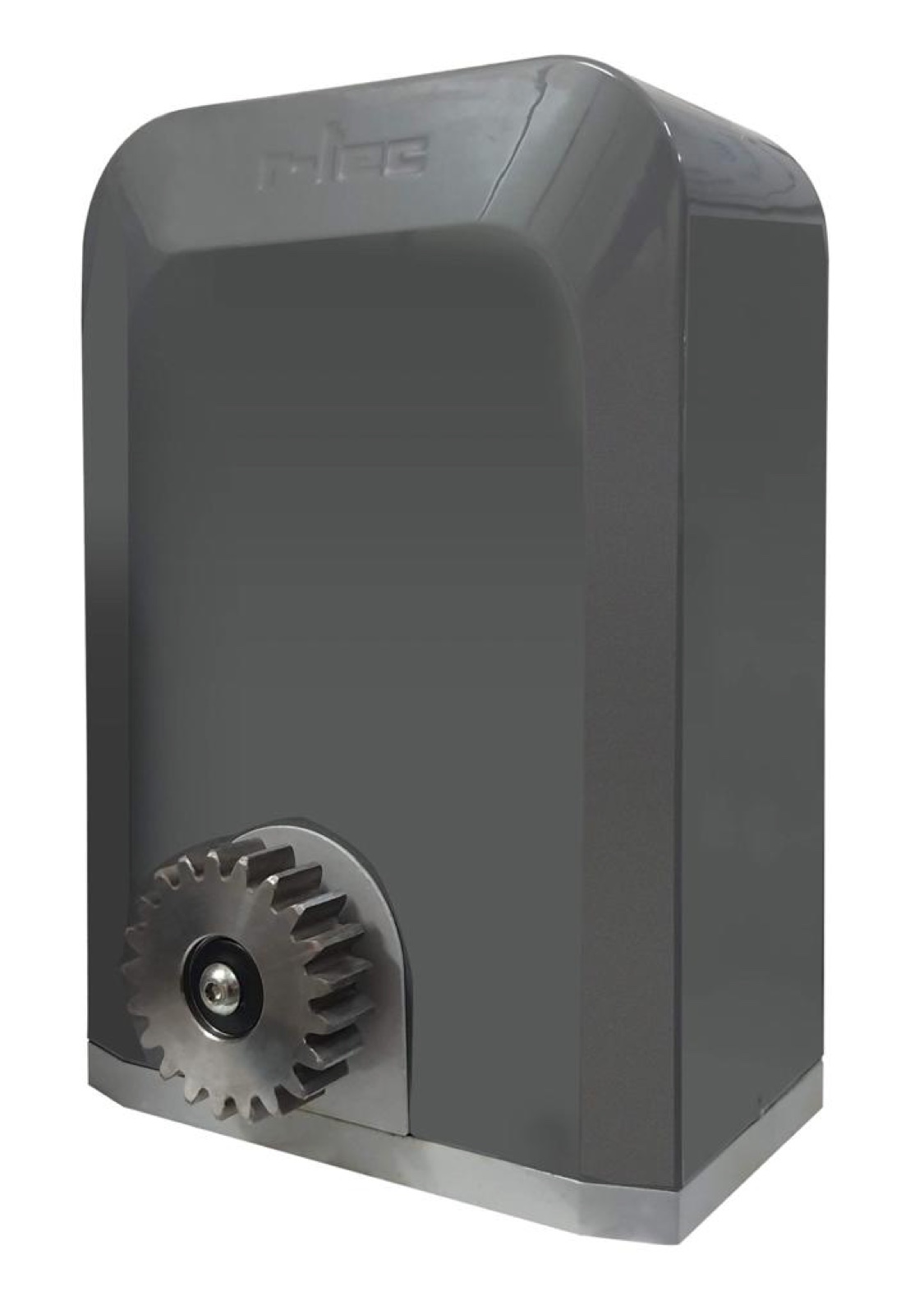
KING 524F vs KING 1224F vs Hatti 1200-HS
| Feature | KING 524F | KING 1224F | Hatti 1200-HS |
|---|---|---|---|
| Max. weight | 500 kg | 1 000 kg | 1 200 kg |
| Speed | Standard | Standard | High-speed |
| Voltage | 24 V DC | 24 V DC | 24 V DC |
| Market position | Light residential | Medium estate + villa | Fast access |
| Control board | G24 | G24 | G24 |
→ KING 1224F is the right choice for battery-backed sites above 500 kg; if speed is priority, Hatti 1200-HS.
24 V DC + battery backup — why important?
220 V AC or 380 V three-phase motors stop during power outages. 24 V DC brushless motor + G24 battery charger board combination:
- Works during power outage — When battery is full, ~30-50 cycles continuity
- Low voltage safety — No electric shock risk with 24 V on contact
- Soft start/stop standard — DC drive naturally provides soft start/stop
- Industrial long life — Brushless motor 20,000+ operating hours
Typical use: Secured estates (power outage must not block vehicle exit), villas (night outage vehicle entry hazard), medical facility entrance (emergency exit mandatory).
G24 universal control board
KING 1224F is driven by the G24 board + battery charger module combination:
- 230 VAC input → 24 VDC output
- 2 photocell channels (opening + closing)
- 433 MHz rolling code receiver slot
- Battery charge terminal (62-63)
- Motor type selection via BT2: sliding = D4 LED flashing at fixed intervals
- Flasher + traffic light + electric lock terminals
Target projects
- Estate entrance gate (1 ton class sliding)
- Villa garden main gate (battery operation critical)
- Small plaza main entrance
- Solar-powered facility (24 V naturally compatible)
- Medical facility + school entrance (emergency exit mandatory)
Field discipline
- Rail parallelism — Side rail and upper guide are aligned with millimetric precision; deviation causes motor thermal protection to trip.
- Wheel quality — Double ball-bearing, stainless steel wheels are preferred; plastic wheels wear out in 2-3 years.
- Limit switch position — 5-10 cm safety buffer at opening and closing ends.
- Power trimpot (T1) — Calibrated according to door weight; medium-high setting for 1 000 kg.
- Battery voltage test — Once every 6 months battery voltage measurement; low voltage shortens backup time.
- Periodic maintenance — Once every 12 months rail + wheel + reducer + battery check.
Contact our team for model-specific information or a quote.