






Technical files
Documents
Specifications and installation information can be viewed or downloaded as PDFs from our server.
User manuals
2Videos
Installation and support guides
These videos demonstrate the model and control board shown. They may provide general reference for other products; use the current technical manual for the relevant model for connections and settings.
Automatic pedestrian doors 7 videos
Control board, limit and parameter settings; locks, hand sensors and accessories.
Based on the door mechanism and board shown; connections need verification for other versions.
Turkish video archive from the Alkur YouTube channel; titles and topic notes are translated.
System / board reference
An overview of the automatic pedestrian door control board and its connection points.
- 4:58 Watch on YouTube
An overview of the automatic pedestrian door control board and its connection points.
- 0:35 Watch on YouTube
A short technical guide to accessory connections on the automatic pedestrian door control board.
- 1:00 Watch on YouTube
A demonstration of travel-limit learning on an automatic pedestrian door.
- 2:25 Watch on YouTube
A guide to adjusting operating parameters on the automatic pedestrian door control board.
- 0:24 Watch on YouTube
A short demonstration of connecting an electric lock to the automatic pedestrian door control board.
- 0:49 Watch on YouTube
An example of connecting a keypad access-control device to the automatic pedestrian door control board.
- 0:51 Watch on YouTube
A guide to connecting a touchless hand sensor to the automatic pedestrian door control board.
r-tec Telescopic Automatic Door
In a telescopic arrangement, leaves slide behind one another. It is an option for pedestrian entrances with limited side-wall space. The number of leaves, clear opening and installation dimensions are determined for the project.
The general automatic-door brochure mentions the telescopic door type but provides no separate leaf-load, speed, maximum-opening or emergency-egress equipment table for that variant. The single- and double-leaf figures in the brochure are not telescopic ratings.
Project verification
Match the control unit, radar, safety photocell and power-outage behaviour to the approved document for the exact telescopic model and to the site design. The general brochure is available in this page’s download section.
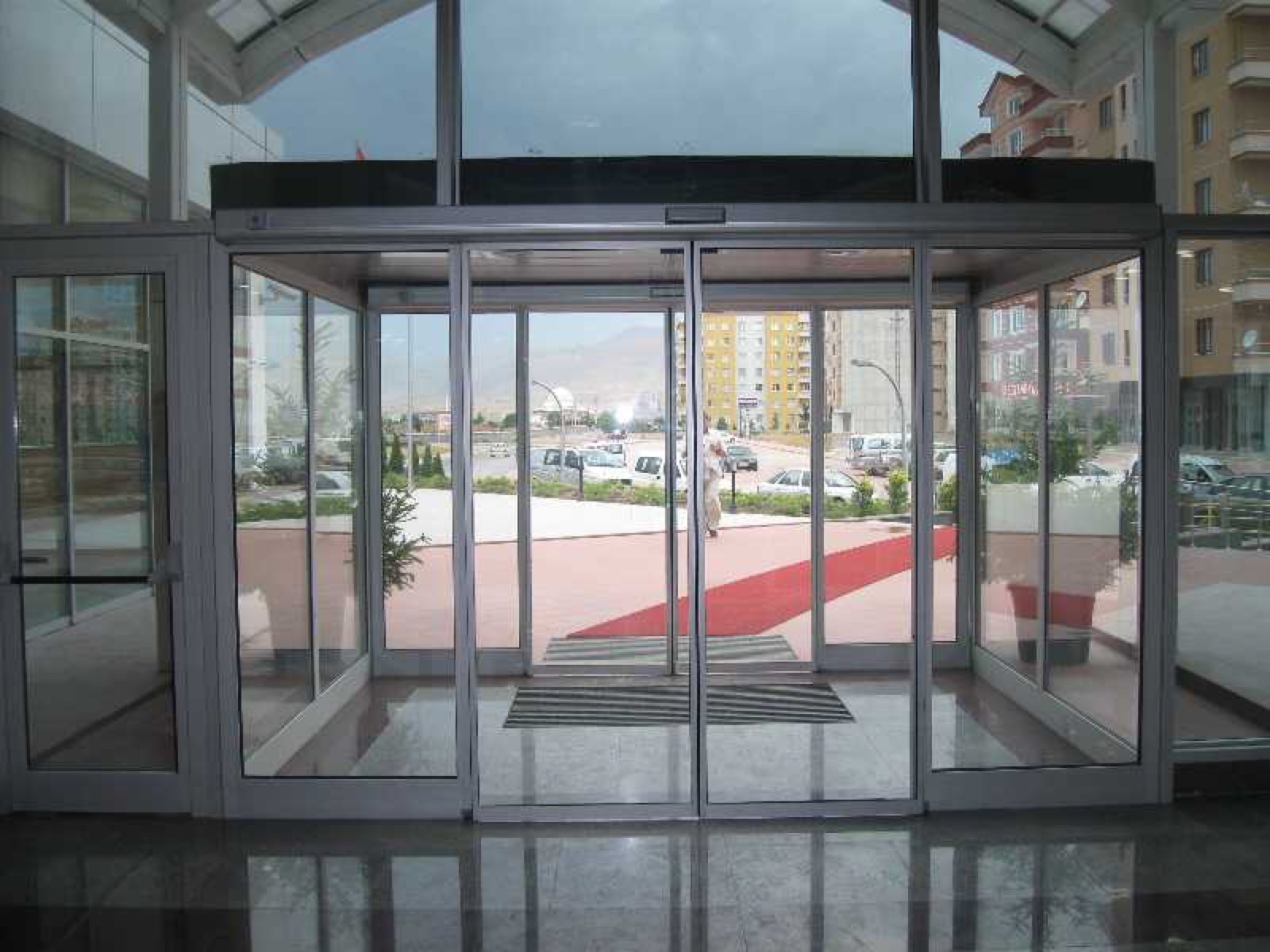
In which sectors is it used?
This product family is preferred in the sectors and application areas below.
- Shopping centre main entrance
- Hospital main entrance
- Airport terminal
- Hotel lobby
Frequently Asked Questions
Below we've compiled the most common questions and answers regarding this product.
-
When should a telescopic automatic door be considered?
A telescopic arrangement may suit a pedestrian entrance with limited side-wall space. The clear opening, number of leaves and installation dimensions must be established in the project drawing.
-
What are the telescopic leaf-load and speed limits?
The linked general automatic-door documents give 150 kg for a single leaf and 120 + 120 kg for a double leaf. They do not give a separate load or speed table for the telescopic variant. Do not transfer the single- or double-leaf values to it; request the exact model document.
Contact our team for model-specific information or a quote.