

Choosing an Industrial Door Motor: Torque, Phase and Control Unit
Published:
Publisher: Alkur Kapı Sistemleri A.Ş.
In garage motor selection the question is “how heavy is the door?”; on the industrial side the equation grows: torque class, supply phase, daily cycle count and control-unit pairing are considered together. Let’s take these four axes in order, through the r-tec industrial door motors range.
Torque: The force that turns the shaft
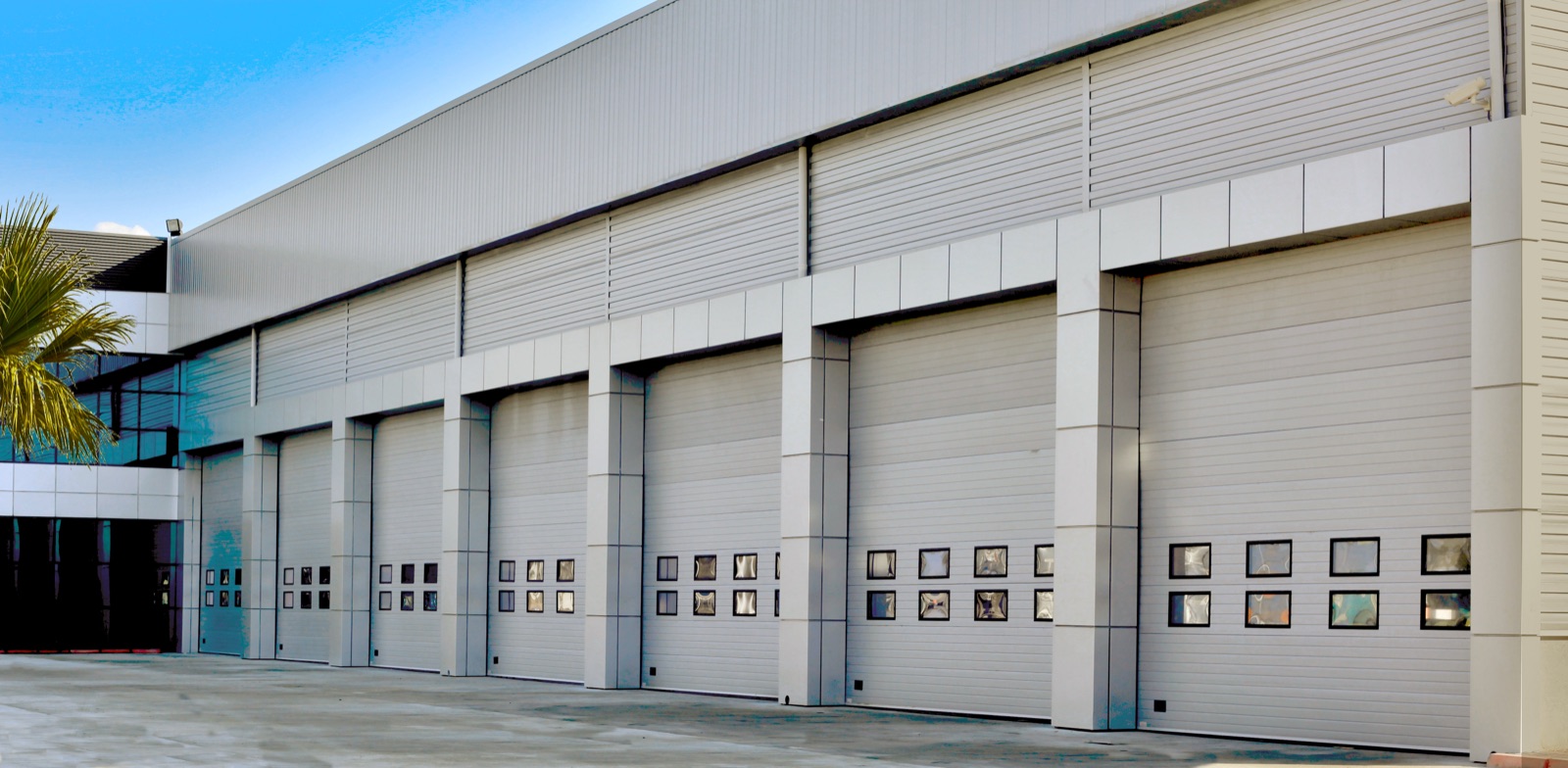
On an industrial sectional door the motor does not pull the door by a cable; it couples to the spring shaft and turns it (shaft drive). That is why the unit is not the newton but the newton-metre. The SIRIUS family has two core classes: the 10024 TCE (100 Nm torque, 0.37 kW) drives standard industrial openings; the 14017 TCE (140 Nm torque, 0.55 kW, 17 cm/s shaft speed) is the motor of hangars and large-gauge doors. Both track position with an electronic limit switch — the wear problem of mechanical limit switches disappears.
Phase: Why is 380 V three-phase the standard?
For motors working continuously under load, three-phase supply means balanced current and cooler running. SIRIUS motors are fed by 380 V three-phase; routing the three-phase line to the opening should be planned together with the electrical infrastructure at the design stage.
Control unit: The motor’s brain
The same motor takes on a different character with different control units:
- I-380 — wall-type cabinet; 1.5 kW output, current protection, phase-sequence and low-voltage monitoring. The standard partner of the NORMTOR industrial sectional door.
- 220-K — contactor-based drive; a simple solution for contactor scenarios.
- 380A — the open-board version; for panel-mount projects integrated into the facility’s fuse cabinet.
- GIGA Sedo — the premium class; LCD menu, multi-door management over RS485, induction loop and traffic light integration.
On the high-speed PVC side the logic changes: the RAPID 85 motor is driven by the FU frequency inverter, which produces a three-phase output from a single-phase 220 VAC input — that pairing is the source of the high opening speed and the soft stop.
Cycle count: The quiet decider
Thirty openings a day and three hundred openings a day do not tire the same hardware equally. Usage intensity affects the motor class, the control unit and the spring-life selection together. That is why the quotation stage asks about your daily cycle profile as much as your opening dimensions.
The intersection of the four axes lands somewhere different in every project; that is the part that takes experience rather than a formula. The full motor and control range is on the automation systems page — and for pairing questions, the contact form is the shortest route.