





What Makes a Door CE-Marked? Final System and Manufacturer Responsibility
Published:
Publisher: Alkur Kapı Sistemleri A.Ş.
By: Ercan Erdoğan
There is a line of reasoning that appears often in specifications and quotations: “The panel comes from Europe, the motor is CE-marked, the hardware is CE-marked — therefore the door is CE-certified.” The sentence sounds logical; the only flaw in the logic is that CE does not work that way.
What CE actually declares
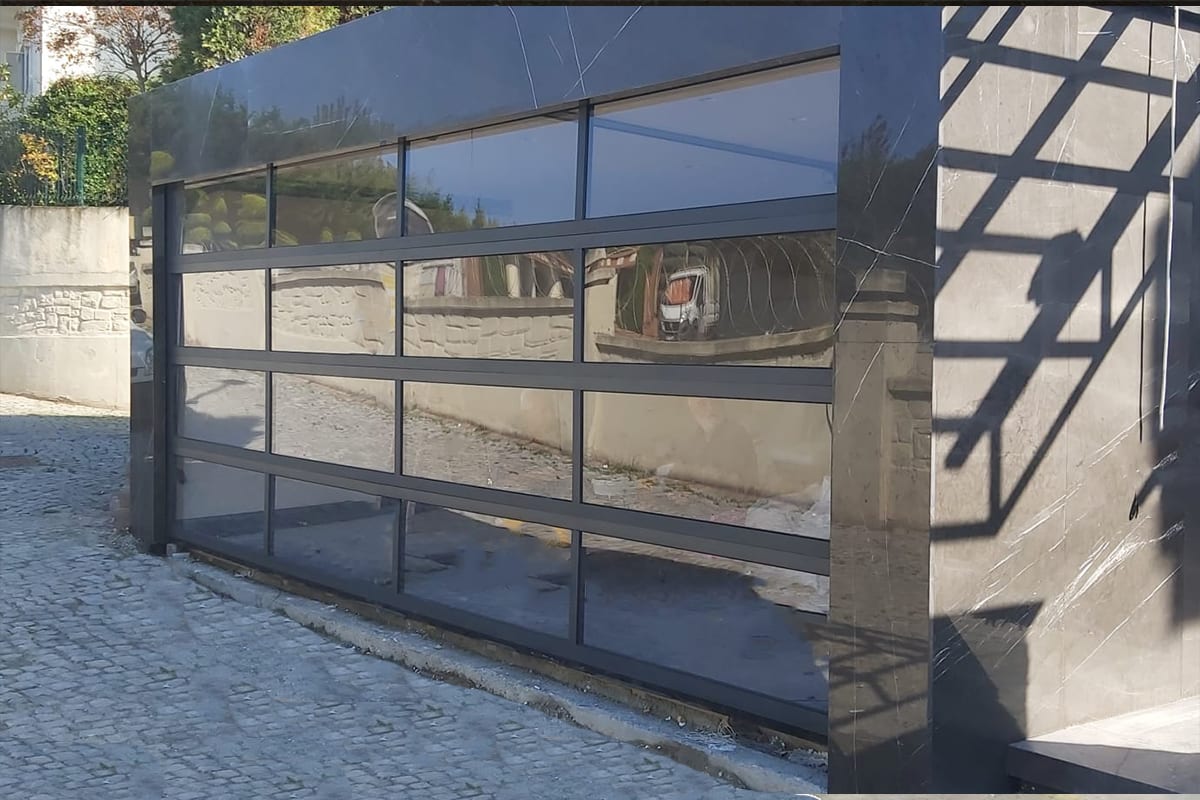
CE marking is not a quality certificate issued by a certification body. It shows that the manufacturer accepts conformity responsibility for the final product placed on the market. In a sectional door, the panels, tracks, springs, motor, control board and safety components form one working system. Applicable construction-product and machinery legislation assesses the declared product type and configuration through that whole. EN 13241 addresses performance characteristics, EN 12604 mechanical requirements, and EN 12453 safety in use for powered doors.
The invisible gap in the assembled door
Assembling a door from CE-marked parts is of course possible, but component declarations do not automatically demonstrate conformity of the final combination. The party placing the final product on the market has to determine which configurations the product type covers, complete the applicable conformity procedure, issue the declaration and retain the technical documentation. A panel, motor or safety component’s own document does not replace the declaration required for the working door system.
Three questions for the specification reader
When you see a CE reference in an offer, three questions are enough:
- Does the declaration cover the door product type placed on the market, or are only component documents being shown?
- Which harmonised standards does it cite — and if EN 13241 is missing, why?
- Is the tested combination the combination being offered?
When all three answers are clear, bids can be compared together with their document scope. When they are not, the letters CE alone do not explain conformity of the final door. We keep the declaration and user documentation for the NORMTOR industrial sectional door accessible on its product and certificate pages so that each claim can be read alongside the scope of its evidence.
Sources and evidence
Original sources for this publication and the specific information each link supports.
- European Commission guide to CE marking (opens in a new tab)
- Publisher:
- European Commission
- URL
- europa.eu
- Last verified:
Claim supported: Explains that CE marking is based on the manufacturer's conformity responsibility rather than being an independent quality certificate.
- Declaration of Performance and CE marking for construction products (opens in a new tab)
- Publisher:
- European Commission
- URL
- single-market-economy.ec.europa.eu
- Last verified:
Claim supported: Explains the relationship between the Declaration of Performance and CE marking for construction products covered by a harmonised standard.
- European Union machinery legislation (opens in a new tab)
- Publisher:
- European Commission
- URL
- single-market-economy.ec.europa.eu
- Last verified:
Claim supported: Provides the current official framework for applicable machinery legislation and manufacturer conformity responsibilities for powered systems.
- NORMTOR sectional-door manufacturer declaration (opens in a new tab) PDF language: TR
- Publisher:
- Alkur Kapı Sistemleri A.Ş.
- URL
- alkur.com.tr
- Last verified:
Claim supported: The signed manufacturer copy has no printed date or document number; it identifies NORMTOR sectional doors with all options and cites EN13241+A2:2016 and EN12453+A1:2022. It is not an independent test report.