





Same Voltage, Different Class: Why a Villa Motor Doesn't Belong on a Compound Gate
Published:
Publisher: Alkur Kapı Sistemleri A.Ş.
By: Ercan Erdoğan
Two gate motors can have the same voltage and load rating without being intended for the same job. Selection also depends on movement time, frequency of use, gate mechanics and the motor’s documented operating limits.
What voltage tells you
24 V or 220 V is an electrical classification. A controller may convert mains input to a different motor voltage, so read mains input, board supply and motor output separately. 24 V alone does not guarantee intensive duty, battery backup or faster movement. Check those functions for the selected model and equipment.
The same weight, different operation
Occasional use at a villa differs from a shared car park’s morning peak. Assess the manual’s duty cycle and temperature limits alongside actual opening and closing time. Record the busiest hour as well as the daily vehicle total. Thermal protection does not replace correct motor selection.
Check the track, wheels, balance and friction too. Fitting a larger motor to a mechanically difficult gate can hide the source of the problem.
Comparing quotations
Both quotations should cover the same gate, duty profile and equipment. Read motor, board, limit system, safety devices, outage operation and installation as separate items. Verify service and spare-part terms in writing; country of origin does not establish them.
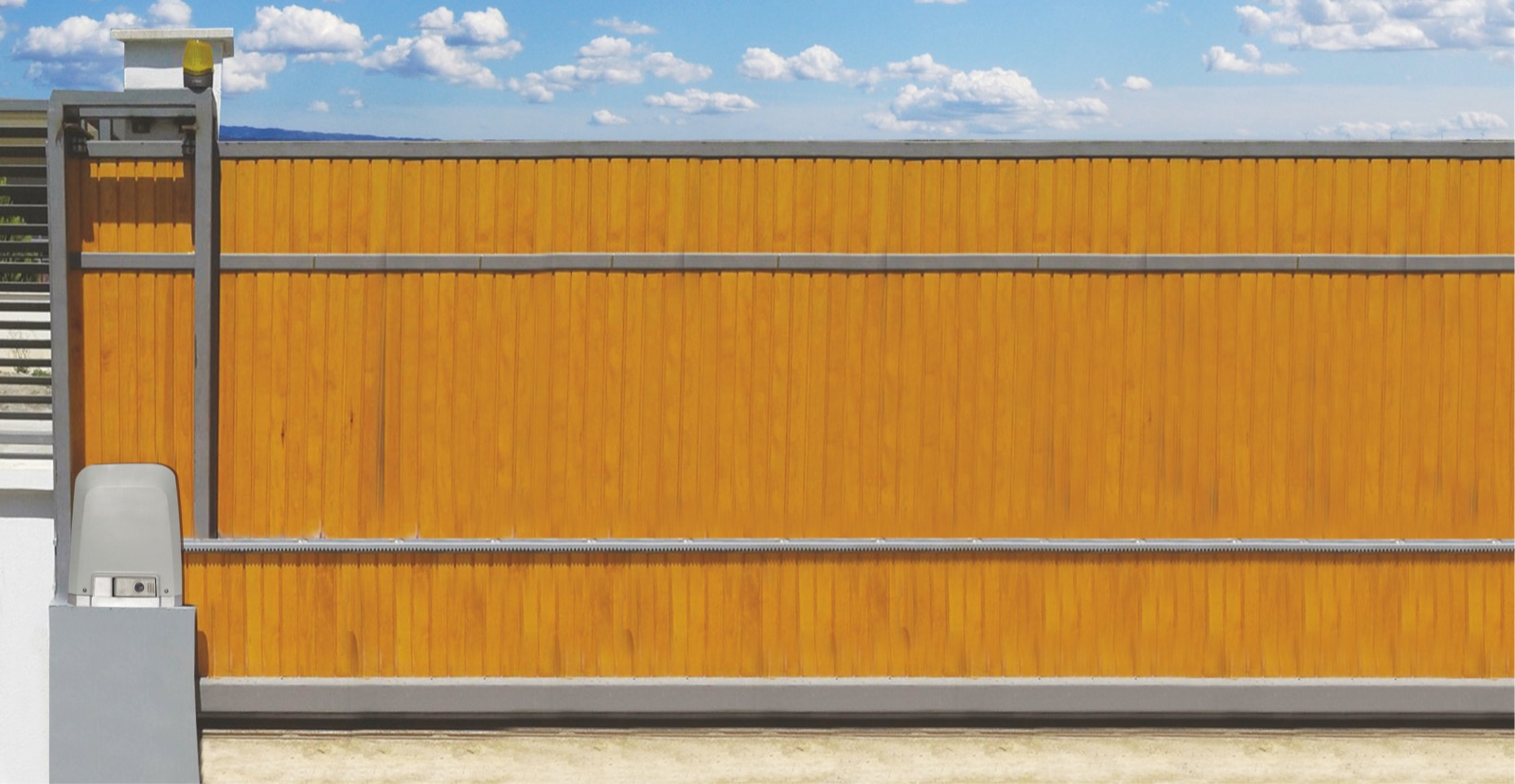
Current sliding models are grouped as HITIT and SAKA 220 V and HATTI 24 V. The name or model number does not decide suitability: gate data and the current model document do. Giving the project partner clear dimensions, weight, mechanical condition, peak usage and supply details creates a useful basis for comparison.