


Documents
All documents open as PDFs in a new tab.
Brochures
2Technical specifications
2Key technical specifications
The most critical technical parameters of this product.
- Technical-specification reference EN 1398, verified for the offered configuration
- Dynamic load capacity 6,000 kg
- Static load capacity 9,000 kg
- Standard sizes 2,000 × 2,500 and 2,000 × 3,000 mm
- Drive Hydraulic (electric piston + pump)
- Platform plate (hinged-lip) 6 – 8 mm teardrop
Show all technical specifications (18)
Platform
| Feature | Value |
|---|---|
| Platform plate (telescopic) | 8 – 10 mm teardrop |
| Flap / Lip thickness | 12 – 14 mm teardrop |
| Flap length (hinged-lip) | 300 – 400 mm |
| Lip length (telescopic) | 600 mm standard / 1,000 mm optional |
Height
| Feature | Value |
|---|---|
| Rise / fall height | +32 / -32 cm recommended |
Motor
| Feature | Value |
|---|---|
| Motor | 380 V / 50 Hz / 1 HP (0.75 kW) |
Mechanical
| Feature | Value |
|---|---|
| Operating temperature | -10 – +40 °C |
| Maximum noise | 70 dB |
Control
| Feature | Value |
|---|---|
| Control unit protection class | IP54 |
Colour
| Feature | Value |
|---|---|
| Standard colour | RAL 5010 (double coat of anti-rust + paint) |
Safety
| Feature | Value |
|---|---|
| Solenoid valve | Intended to prevent platform fall on power loss |
Type
| Feature | Value |
|---|---|
| Hinged-lip type options | Single Leaf or 3 Leaf (1+2) |
Videos
Overview
The NORMDOCK dock leveller bridges the height difference between a vehicle bed and the loading area with a hydraulic platform. Forklift and carried load, vehicle bed heights, platform dimensions, lip movement and pit preparation are assessed together for the project.
The published manufacturer specification references the EN 1398 requirement; it is not, by itself, an independent CE certificate or a current conformity file. The quoted dimensions, capacity and equipment must match the valid project documentation.
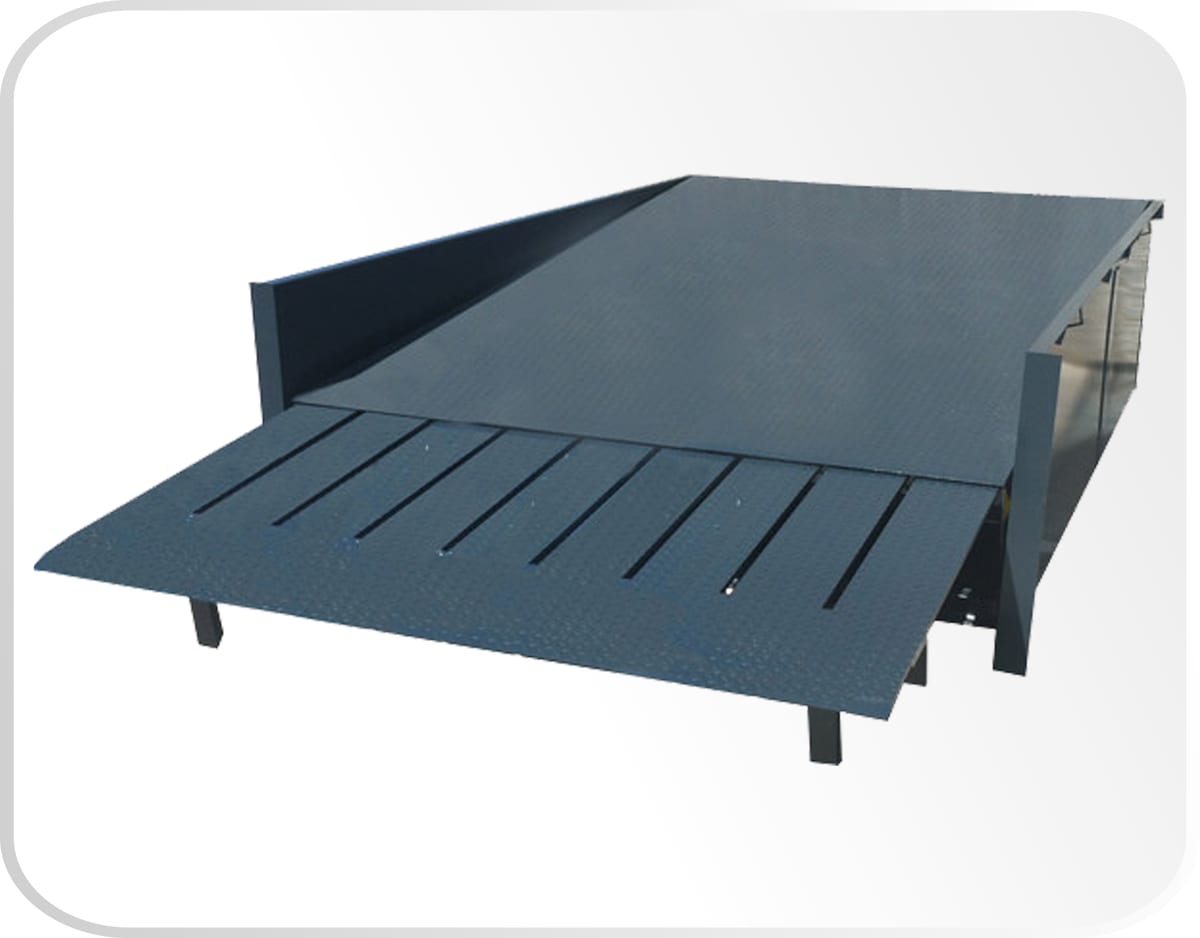
What do 6,000 kg dynamic and 9,000 kg static mean?
The English sections of the hinged and telescopic specifications state 6,000 kg dynamic and 9,000 kg static load. Dynamic describes a load in transit; static describes a stationary load. The 9,000 kg static figure is not a model option for a 9-tonne moving load.
The forklift’s own weight, carried load and operating conditions are assessed together. Stating its lifting capacity alone is insufficient; share its technical data plate and load profile with the project team.
Hinged or telescopic?
| Feature | Hinged | Telescopic |
|---|---|---|
| Lip movement | Front flap rotates out | Lip extends forwards |
| Flap/lip length in the specification | 300–400 mm | 600 mm; 1,000 mm on request |
| Platform plate in the specification | 6–8 mm | 8–10 mm |
| Selection check | Vehicle position and flap contact with the bed | Required reach and contact with the vehicle bed |
Lip length does not mean a vehicle can stand that same distance away from the dock. Vehicle position and lip contact with the bed are checked for the project. The brochure lists a single flap or three flaps (1+2) as hinged-type options; these are separate from telescopic movement.
Platform and pit dimensions are separate
The 2,000 × 2,500 mm and 2,000 × 3,000 mm platforms have the same width and different lengths. These names do not give the concrete pit dimensions. The 2000 × 2500 pit drawing and 2000 × 3000 pit drawing show separate details.
The published drawings also identify the angle anchors and cable duct. Before concrete is poured, the construction team needs the project-confirmed drawing for the selected leveller; dimensions from different brochures and drawings are not interchangeable. The measurement preparation guide explains the information to provide.
Hydraulic system and operating limits
The specification describes a 380 V / 50 Hz / 0.75 kW motor, an IP54 control unit and a maximum control output of 2 kW. It lists a recommended rise/fall difference of +32 / −32 cm, an operating range of −10 °C to +40 °C and maximum operating noise of 70 dB. Compatibility with vehicle heights, power supply and the site environment is checked at quotation stage.
The maintenance safety bar, solenoid valve intended to prevent a fall on power loss, buffers and platform surface form part of the specified equipment. Delivered equipment, site conditions and operating instructions are assessed together.
Information for quotation and maintenance
- Forklift data plate, unladen weight and carried-load profile.
- Vehicle bed heights and approach arrangement.
- Space available for the platform and the existing or proposed pit drawing.
- Indoor/outdoor environment, power supply and daily usage.
- Opening and vehicle perimeter to coordinate with a dock shelter.
Sales and after-sales processes run through a dealer, distributor or partner. Maintenance frequency follows the delivered leveller’s instructions and site use. The leveller selection guide brings the capacity, platform and lip decisions together.
In which sectors is it used?
This product family is preferred in the sectors and application areas below.
- Logistics and distribution centre
- Storage and handling
- Cargo terminal
- Production facility dispatch area
- Automotive spare-parts logistics
Frequently Asked Questions
Below we've compiled the most common questions and answers regarding this product.
-
What is the difference between dynamic and static capacity?
The published NORMDOCK specifications distinguish a 6,000 kg dynamic load from a 9,000 kg static load. These are not two interchangeable moving-load ratings. The forklift, carried load and operating conditions are assessed against the dynamic capacity of the quoted leveller.
-
Are hinged, telescopic and three-flap the same distinction?
No. A hinged flap rotates out, while a telescopic lip extends forwards. The brochure lists a single flap or three flaps (1+2) as separate hinged-type options. Flap count alone does not establish telescopic movement or a vehicle-height range.
-
Are platform and pit dimensions the same?
No. 2,000 × 2,500 mm and 2,000 × 3,000 mm describe the platform. Pit width, length, depth, anchors and the cable duct are confirmed from the drawing for the selected model. The project team's approved drawing is used before construction.
-
Is there a Domestic Product Certificate?
The site's current source set does not publish an in-date Domestic Product Certificate for the NORMDOCK leveller. If a tender or project requires one, its product scope, holder and validity date are verified separately at quotation stage; only an in-date file matching the offered configuration may be used.
-
How is the maintenance frequency determined?
The maintenance plan follows the instructions for the delivered leveller configuration and the site's operating conditions. The project dealer or authorised technical team plans hydraulic and mechanical checks, including the maintenance safety bar and other equipment as specified in the product instructions.