





Choosing Doors and Loading Equipment for a Cold Chain Facility
Published:
Publisher: Alkur Kapı Sistemleri A.Ş.
Summary
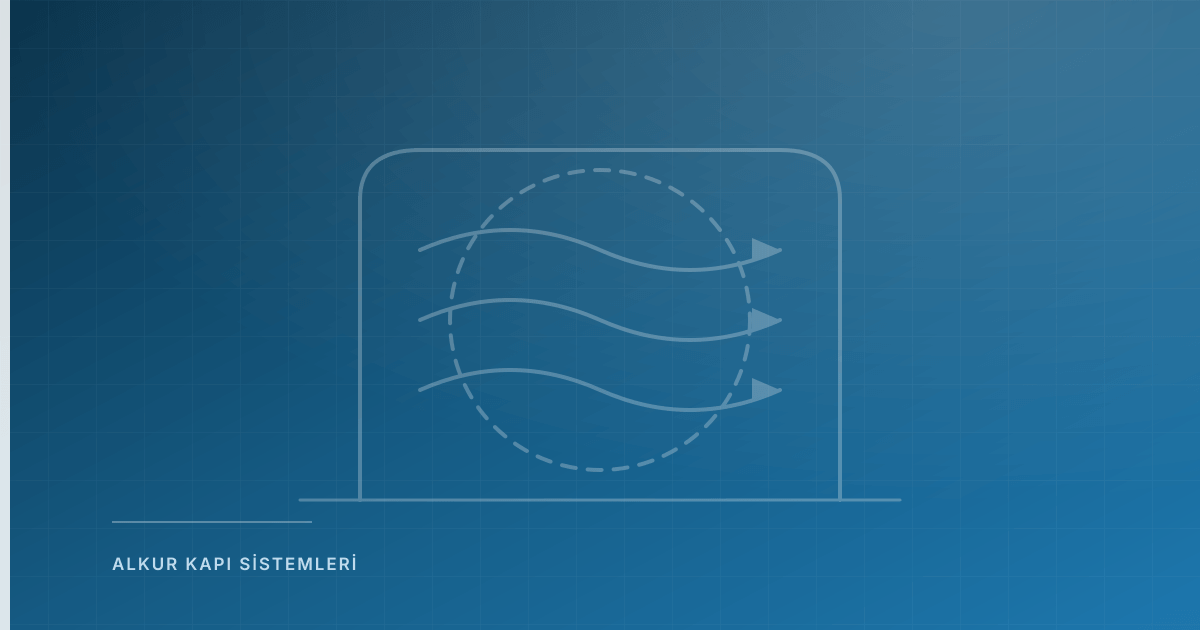
In a cold chain, a door is not a passage element but part of the insulating envelope. Three axes decide it: the insulation value of the panel, how much the opening leaks when closed (seals and sealing classes), and how long it stays open. The third is the most expensive at most facilities, because the warm air entering on every cycle writes straight into the cooling load.
At cold stores, food production plants and pharmaceutical logistics sites, door selection is not only a mechanical decision: the door you choose directly sets part of the load your refrigeration system carries all year. This article lists what to look at when choosing doors and loading equipment for a cold chain.
Three axes: insulation, sealing, open time
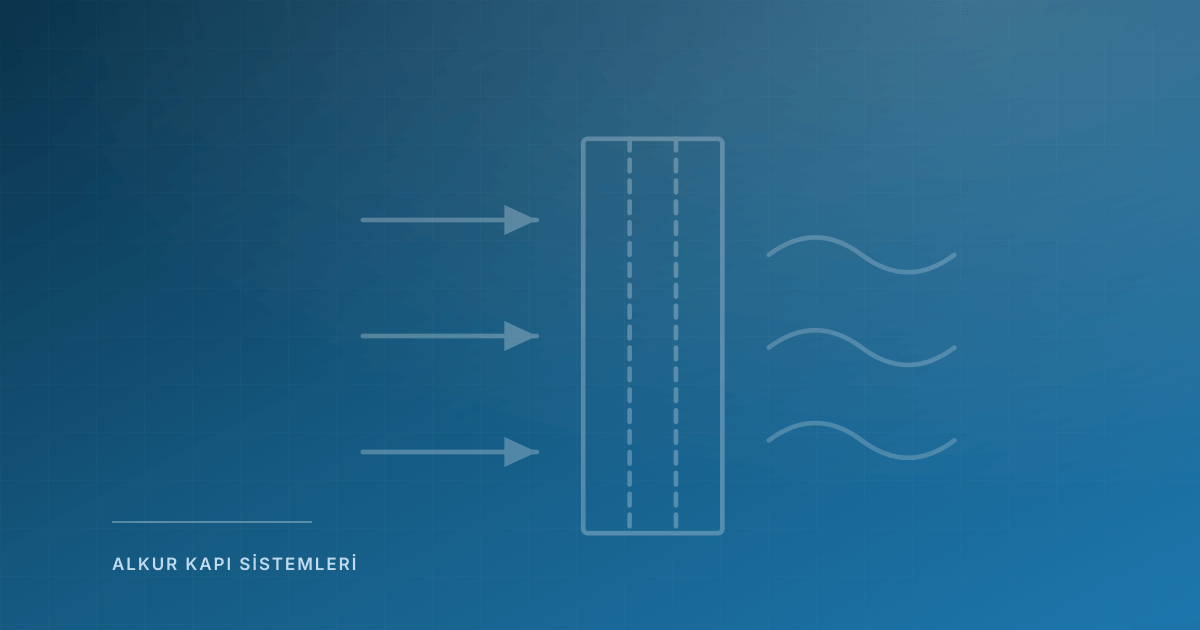
Panel insulation governs heat transfer through the closed door. NORMTOR panels are taken at 40 mm thickness with 40 kg/m³ polyurethane infill, giving U = 0.604 W/m²K.
Sealing is the air and water passing around a closed door. In a specification it is defined by EN 12425 Class 2 water tightness and EN 12427 air permeability; the sealing itself is provided by EPDM seals.
Open time determines how much warm air enters on each cycle. It is the item most often skipped in selection and the most visible one on the energy bill.
Speed on internal passages, insulation on the envelope
Cold chain facilities have two distinct door requirements, and confusing them is a common mistake.
On the envelope (despatch doors, warehouse entrances), insulation and sealing govern. Here the sectional door, with its 40 mm polyurethane panel and perimeter seals, is the right answer. Even where the leaf stays open a long time, its performance in the closed position provides the real saving.
On internal passages (between cold room and preparation area, corridors with forklift traffic), speed governs. This is where the high-speed PVC door comes in: 0.65 – 0.70 m/s without an inverter, rising to 1.5 m/s with one. On a corridor crossed hundreds of times a day, a door standing open 8 seconds instead of 3 turns into a serious annual cooling load.
Putting an insulated door on an internal passage is also a mistake
A slow insulated door on a frequently crossed internal corridor gives back through open time what the panel saved. Equally, an uninsulated fast door on the envelope enlarges the loss in the closed position. At most facilities the right installation uses both together.
Components working at low temperature
A cold environment tests the components as much as the door itself:
- Seals — the perimeter and head seal must retain flexibility down to −30 °C; a hardened seal ends the sealing.
- Motor and control — the operating range on r-tec motors is −20 to +55 °C; in stores below freezing, motor position and thermal headroom are assessed separately.
- Hydraulic equipment — the operating range on a dock leveller is −10 to +40 °C.
- Condensation — condensation forms on the door surface at the boundary between warm and cold zones; it should be planned together with ventilation, for slip risk on the floor and corrosion on the panel.
Installation and commissioning differ in a cold facility
In cold stores and in food or pharmaceutical environments the installation plan changes too: hygiene and temperature conditions have to be maintained throughout. That means a narrower working window, temporarily isolating the zone, and the installation team working to the hygiene rules. Having the opening clear, the sub-frame square and the floor at one level before installation matters even more at these facilities, because a second installation day stops production a second time.
At commissioning, two items are checked on top of the standard tests: that the bottom seal closes fully onto the floor (the most common source of cold leakage) and that the perimeter seals make contact at every point in the closed position. Any point where light shows through from outside with the door closed is a point where air passes too.
Lift type and services under the ceiling
The space under the ceiling in a cold store is usually crowded: evaporators, refrigeration lines, lighting and sprinkler pipework. That bears directly on the lift type for a sectional door.
Standard lift takes the leaf into the horizontal plane immediately above the opening and gathers it back under the ceiling; a leaf landing in front of an evaporator can block service access. High lift carries the leaf vertically for a distance and clears that run, while vertical lift leaves the soffit entirely free. When measuring headroom, note the position of this pipework as well; a lift type chosen on clearance alone will foul the services on site.
The loading side: the chain breaks without a shelter
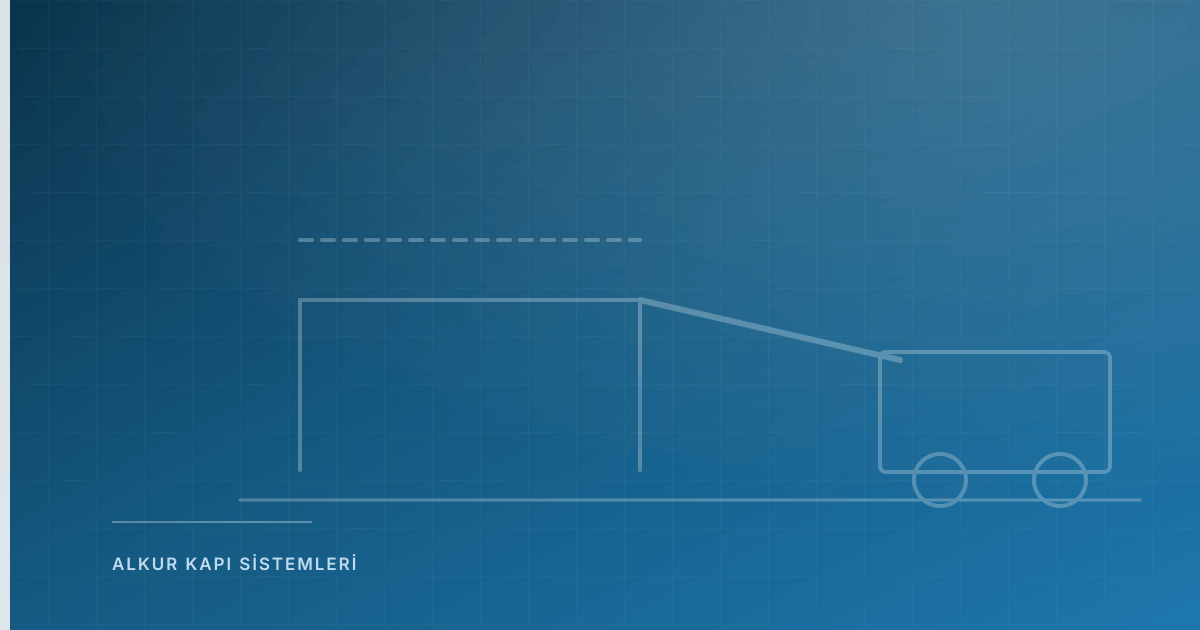
In a cold chain the greatest heat loss is usually not through the door but through the gap between vehicle and building during loading. The leveller bridges the level difference between the vehicle bed and the building floor; the shelter wraps around the trailer to close that gap and isolate the loading area from outside conditions.
The shelter curtain is PVC conforming to DIN 53352 / 53356 / 75200 at 3 mm thickness and 900 g/m²; its anti-static, stain-resistant construction governs compliance with HACCP and GMP hygiene control in food, pharmaceutical and beverage facilities. The standard size is 3,400 × 3,450 × 620 mm, with production possible up to 4,200 × 4,500 × 1,000 mm on special projects.
The leveller and the shelter need planning together: where a shelter is added later, its opening has to be forced to suit the leveller and insulation performance suffers.
Production areas requiring hygiene
In food and pharmaceutical production, the door is part of the cleaning routine and of cross-contamination control. Two items stand out.
Surface and cleaning: on HPVC doors the curtain is 900 g/m² panama-weave PVC and suits regular cleaning. On the activation side, a hand sensor removes the need to touch a button; its housing is stainless steel or white plastic and resists isopropyl alcohol and standard disinfectants.
Pressure and temperature separation: the hand sensor’s detection range is set between 5 and 15 cm, and that shortness is deliberate; passing staff opening the door needlessly means the loss of pressure difference and temperature separation in a hygiene zone. Where general approach detection is wanted, a radar or active infrared sensor is used instead.
What to establish, in order
Which passages are on the envelope and which are internal? The two call for different products.
- How many cycles a day does each passage see, and how many at peak hour?
- What is the temperature difference between the two sides?
- Which lines fall under hygiene control (HACCP, GMP)?
- Are the leveller and shelter being planned together on the despatch doors?
- Has the pit concrete been poured, or can the detail still reach construction?
Send us the dimensions and the usage profile and we can work out together which product family belongs on which passage.