




The Philosophy of Made-to-Measure: Why We Don't Sell Off-the-Rack Doors
Published:
Publisher: Alkur Kapı Sistemleri A.Ş.
By: Ercan Erdoğan
Two openings of the same width may need different door arrangements. Headroom, side clearance, services and usage can change rail, spring and motor selection. Made-to-measure production starts with collecting this information together.
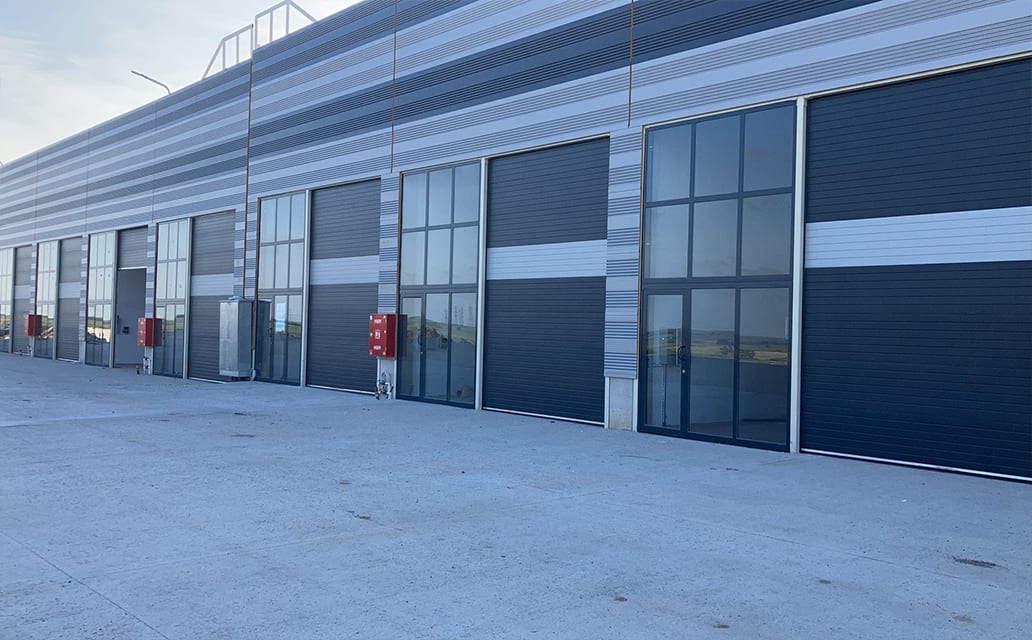
An opening is not a datum; it is a design input
Picture two facilities, each with a dispatch opening of “roughly four metres”. In the first, the lintel is high and there is plenty of wall on both sides; in the second, the ceiling is low and a column presses in on one side. These two openings of equal width demand different rail types, different spring calculations, different panel divisions. Clear width and height determine not just the door’s size but the door’s architecture.
The same goes for the usage profile. A door that opens thirty times a day and one that opens three hundred times are not the same door even at identical dimensions — they carry different decisions, from spring cycle class to motor selection.
Where does standardisation end and tailoring begin?
Don’t misunderstand: we believe in the value of standardisation. Panel sections, surface patterns, control boards, safety equipment — these are catalogued, serially produced components with repeatable quality. Tailoring lives not in the components themselves but in their combination. Like a tailor cutting a different jacket for every client from the same cloth, we manufacture a different door for every opening from the same panel.
This distinction also explains the pricing. A ready price list is built on the assumption of ready sizes; with us, every quotation is calculated on top of dimension and usage data. There is no list, because a list is a rounding — and a rounding always works against either the customer or the manufacturer.
The return on patience
Made-to-measure requires clear opening dimensions and the usage profile. The aim is to select springs, seals and the movement arrangement to match that data. Selection alone does not guarantee trouble-free operation or a particular lifetime; correct installation, use and maintenance also matter.
A tailor’s first question is always the same: “Shall we take your measurements?” So is ours — the tape measure is yours, the calculation is ours.