


The Discarded Board and the Board That Stays: Designing for Repair
Published:
Publisher: Alkur Kapı Sistemleri A.Ş.
By: Ercan Erdoğan
When a control board fails, the first question is whether the entire motor needs replacing. Assessing the fault and repair options can keep usable components from being discarded unnecessarily.
Repair is not a feature you can add later
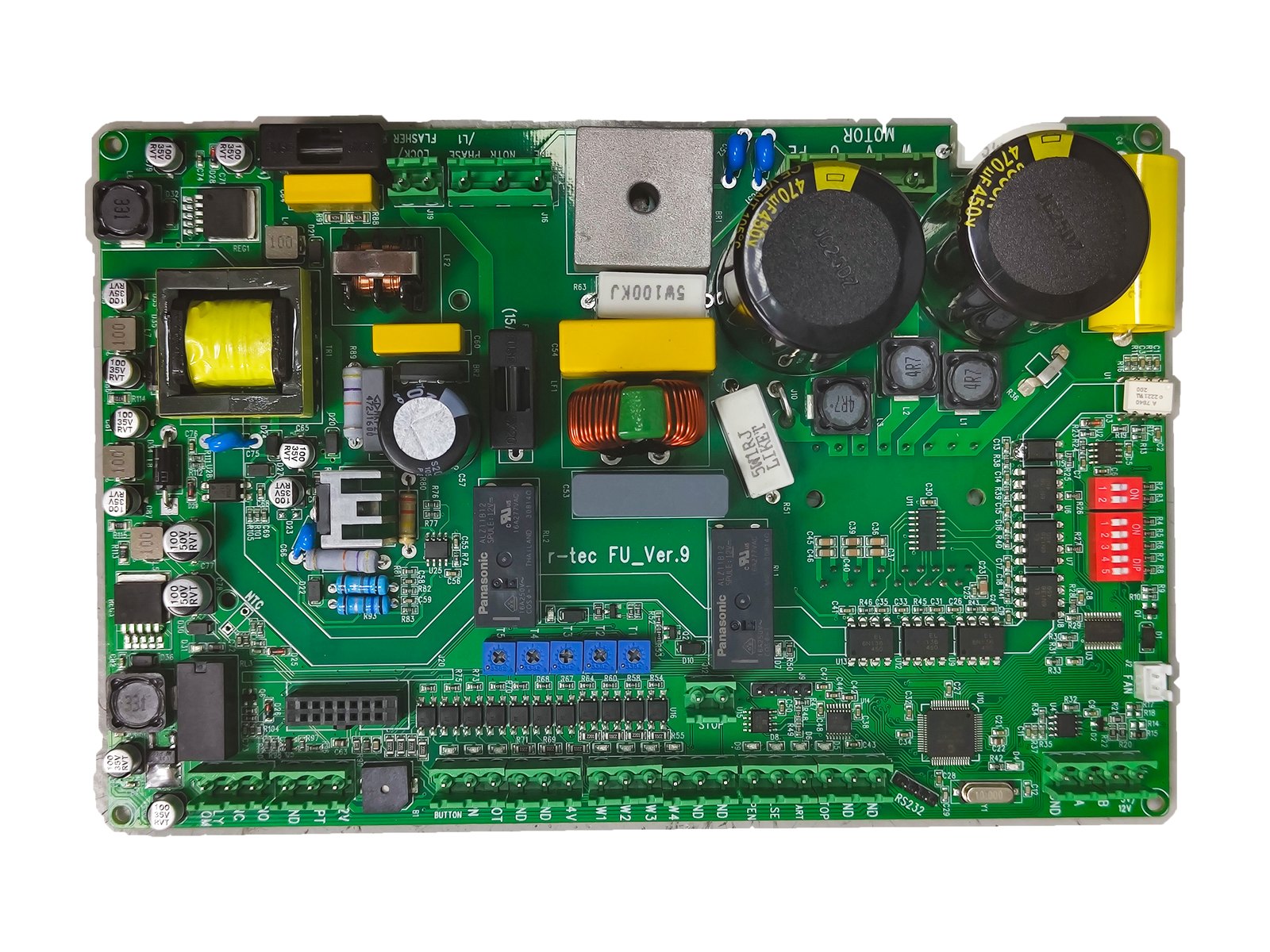
Repairability is decided at the board’s design desk, before the product reaches the shelf. Reusing a documented control architecture can help spare-parts planning and allow diagnostic knowledge to accumulate. The G24 universal board illustrates that approach: its manual lists sliding gates, swing gates, barriers and sectional doors as application classes for suitable 24 V DC motors. It does not establish compatibility with every motor in those classes. The selected motor, board revision, limit system and required modules must be checked together. A service team that knows the verified configuration deeply can build on that knowledge instead of treating each repair as an unrelated case.
The repair route
Fault assessment runs through the dealer, distributor or project partner. Record the product label, board revision, connections and observed symptom together. Repairability is established through technical examination; not every board can be repaired, and not every fault is caused by wiring.
End users first contact the installation partner. That partner passes on a request for manufacturer assessment if needed. Diagrams and videos on the r-technic portal help a technical team prepare when matched to the right model and revision.
Repair’s silent partner
Every repaired board carries an invisible gain as well: a new board that never needs manufacturing, a motor body that never reaches the scrap heap, a shipment that never travels. Repair culture is the environmental practice least in need of being presented under an environmental heading — its own economics already lead there. That is why, in our approach to sustainability, repairability appears not as a bolted-on promise but as a habit already running on the production side.
The discarded board is easy — a signature, a new order. The board that stays demands labour: in design, in service, in documentation. We chose the side that demands labour, because a product lives as long as its maker remains its counterpart.
Sources and evidence
Original sources for this publication and the specific information each link supports.
- GATE 24 control unit manual (opens in a new tab) PDF language: TR
- Publisher:
- Alkur Kapı Sistemleri
- URL
- alkur.com.tr
- Last verified:
Claim supported: Pages 2–5 define application classes, BT2/LED motor selection, DIP switches and trimpots. They do not establish LCD programming, Couper/Prince model compatibility or temperature/phase protection.