






Technical files
Documents
Specifications and installation information can be viewed or downloaded as PDFs from our server.
User manuals
1Key technical specifications
The most critical technical parameters of this product.
- Maximum charging power 11 kW
- Three-phase input / output current 400 V AC / 16 A
- Single-phase input 220 V AC (charging power not stated)
- Vehicle cable 5 m Type 2
- Protection class IP54
- Residual-current protection External 30 mA RCD (supply panel)
Videos
You can find all of our product and installation videos on our YouTube channel.
Visit Our YouTube ChannelOverview
WCU-11 Portable is a portable AC vehicle charger. Its manual’s specification table gives up to 11 kW at 400 V three-phase input and 16 A output. The table also lists 220 V single-phase input, but does not specify a separate charging-power value for it. The vehicle side has a 5 m Type 2 cable and the enclosure is IP54 rated.
The device has no internal residual-current protection. An external 30 mA RCD is required in the supply panel.
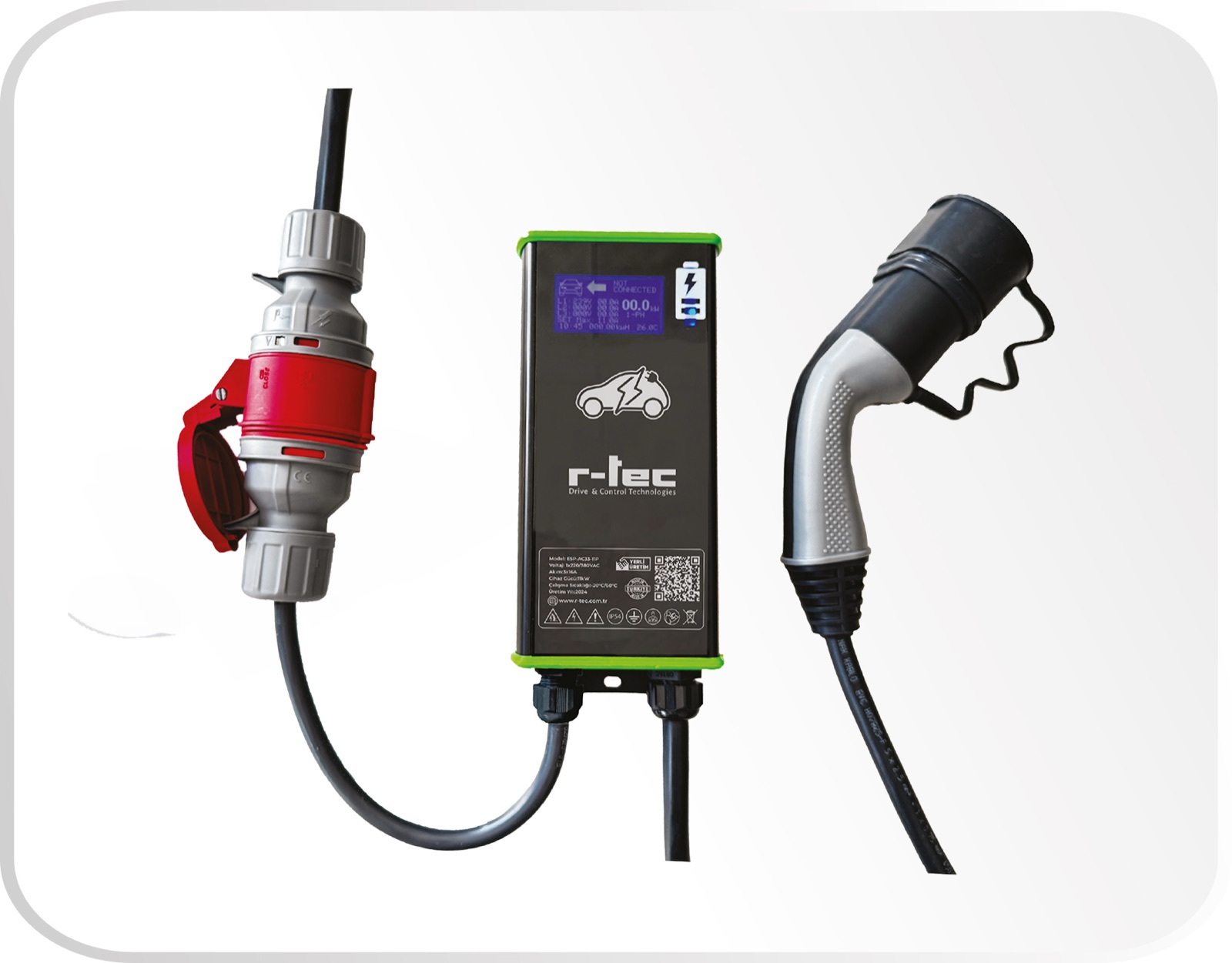
Portable use
The unit can be moved between suitable supply points. A competent electrician checks the supply circuit, protective earth and residual-current protection at each point. The manual’s image shows an industrial-style connector, but it does not confirm the exact plug or adapter variant and pinout. Confirm the connection for the ordered model.
Power and setting
According to the manual’s screen description, maximum charging current is adjusted with the device’s Up and Down buttons, while the number of phases is detected on the display. This does not establish automatic recognition of a socket type or automatic selection of a current limit for that socket. Vehicle and installation limits govern the actual charging power.
Manual and circuit selection
The WCU-11 manual contains an internal conflict: its 11 kW specification table is followed by a 22 kW installation-table heading. Do not use that installation table alone as the final cable and breaker design; obtain current manufacturer confirmation and a site-specific electrical design. The safety section clearly says there is no internal RCD and that the supply panel requires 30 mA protection. A competent electrician verifies earthing and connections under the applicable rules.
In which sectors is it used?
This product family is preferred in the sectors and application areas below.
- Construction and temporary sites
- Corporate fleet backup charging
Frequently Asked Questions
Below we've compiled the most common questions and answers regarding this product.
-
What charging power does the WCU-11 provide?
The manual's specification table lists up to 11 kW, 400 V three-phase input and 16 A output. It also lists 220 V single-phase input, without a separate charging-power value for that connection. Actual power depends on the vehicle and site. A 3.7 kW rating for any specific socket or adapter is not confirmed by this manual.
-
Why does the installation table say 22 kW?
The WCU-11 manual's specification table says 11 kW, but its electrical-installation table is headed 22 kW. Until that conflict is resolved, the table should not determine the final cable and protection design. The safety section does clearly require an external 30 mA RCD in the supply panel.
Contact our team for model-specific information or a quote.