
The Discarded Board and the Board That Stays: Designing for Repair
Published:
Publisher: Alkur Kapı Sistemleri A.Ş.
The electronic age carries a silent assumption: a failed board is scrap. We have grown used to it with phones and televisions; in gate automation, the bill for that assumption is heavy — because what goes is not only the board. A motor set aside as “unrepairable” is, more often than not, scrapped with its body in perfect health. We do not accept that assumption, and we show it at the design table.
Repair is not a feature you can add later
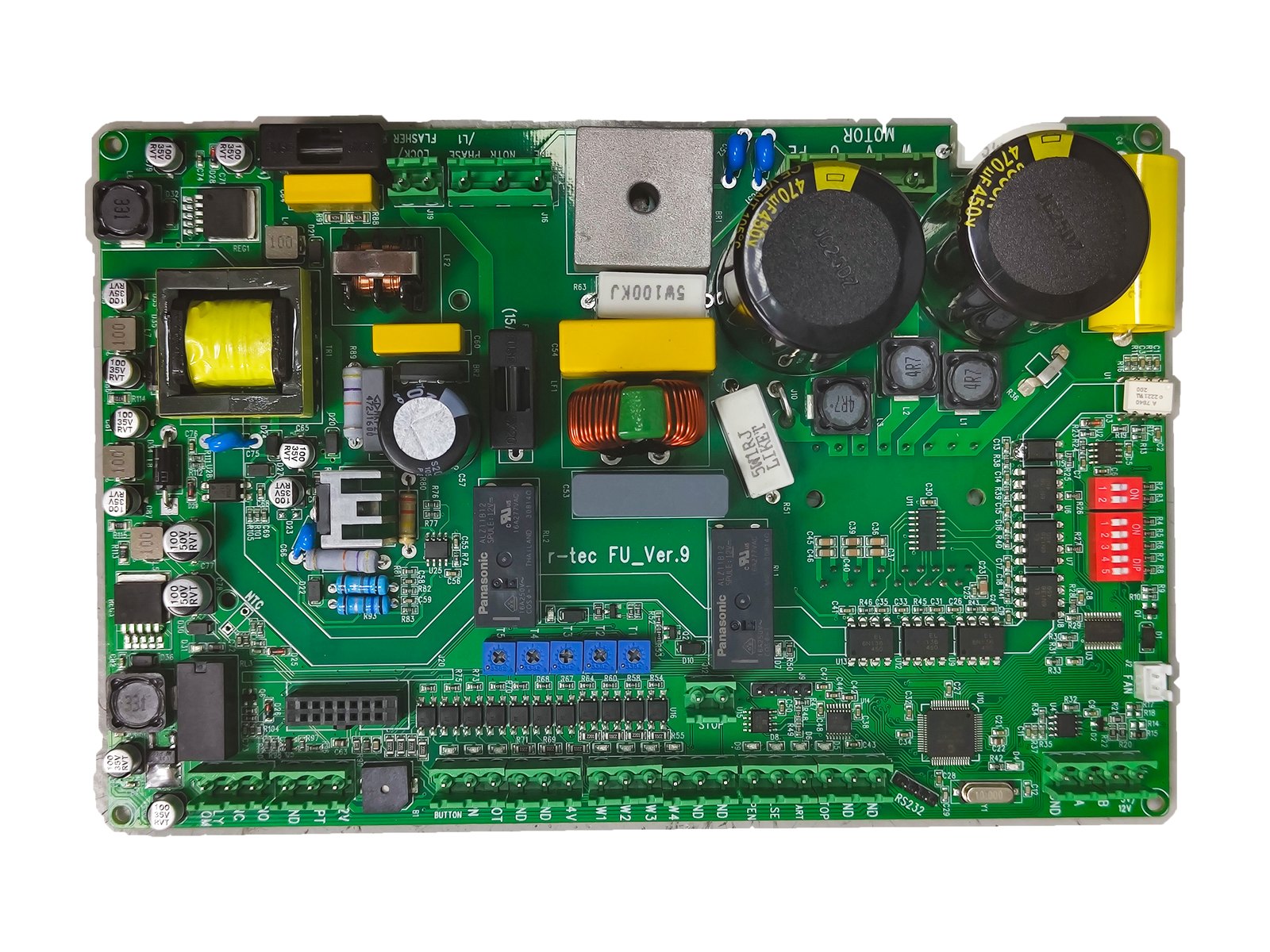
Repairability is not something that can be decided after the product reaches the shelf; it is decided at the board’s design desk. On our side the biggest enabler is the single-board architecture: the same control board serving the entire 24 V gate automation range — sliding gates, swing gates, barriers — makes spare parts findable and lets diagnostic knowledge accumulate. A service team that knows a few boards deeply is always faster than one that knows many boards shallowly. The industrial-side representative of the same approach, the G24 universal board, is the field summary of what this architecture means.
The box that returns from the dealer
The second leg is having an address the box can return to. Faults in products coming back from our dealers are handled at the technical service benches of our Hendek factory and our İstanbul office; in most cases the board is repaired and goes back to its post in the field. Let us also draw an honest line here: this is not an end-user service — the process runs through the dealer channel, and the first counterpart for any product is always the dealer in the region. The minority that cannot be saved is well defined: physical breakage, and boards turned to coal by the wrong power connection. Even most of those are, in truth, preventable failures — which is exactly why the wiring diagrams and commissioning videos sit open to everyone on the r-technic portal.
Repair’s silent partner
Every repaired board carries an invisible gain as well: a new board that never needs manufacturing, a motor body that never reaches the scrap heap, a shipment that never travels. Repair culture is the environmental practice least in need of being presented under an environmental heading — its own economics already lead there. That is why, in our approach to sustainability, repairability appears not as a bolted-on promise but as a habit already running on the production side.
The discarded board is easy — a signature, a new order. The board that stays demands labour: in design, in service, in documentation. We chose the side that demands labour, because a product lives as long as its maker remains its counterpart.