





Sound in the Industrial Environment: The Invisible Cost of a Decibel
Published:
Publisher: Alkur Kapı Sistemleri A.Ş.
When a facility is planned, square metres are calculated, energy is calculated, flow is calculated; sound is usually noticed afterwards. Yet noise is a cost without an invoice — nobody pays it, and everybody pays it: in concentration, in fatigue, in announcements repeated twice.
The equipment’s sound report card
Managing sound begins with equipment selection. A few examples, from our own product data:
- The operating noise of a hydraulic dock leveler is capped at 70 dB maximum — in the NORMDOCK specification this is an explicit value under the heading of operator comfort. 70 dB is the threshold at which two people standing side by side can talk without raising their voices; holding that line on every rise and fall of the leveler means fatigue that doesn’t accumulate through the day for the dock crew.
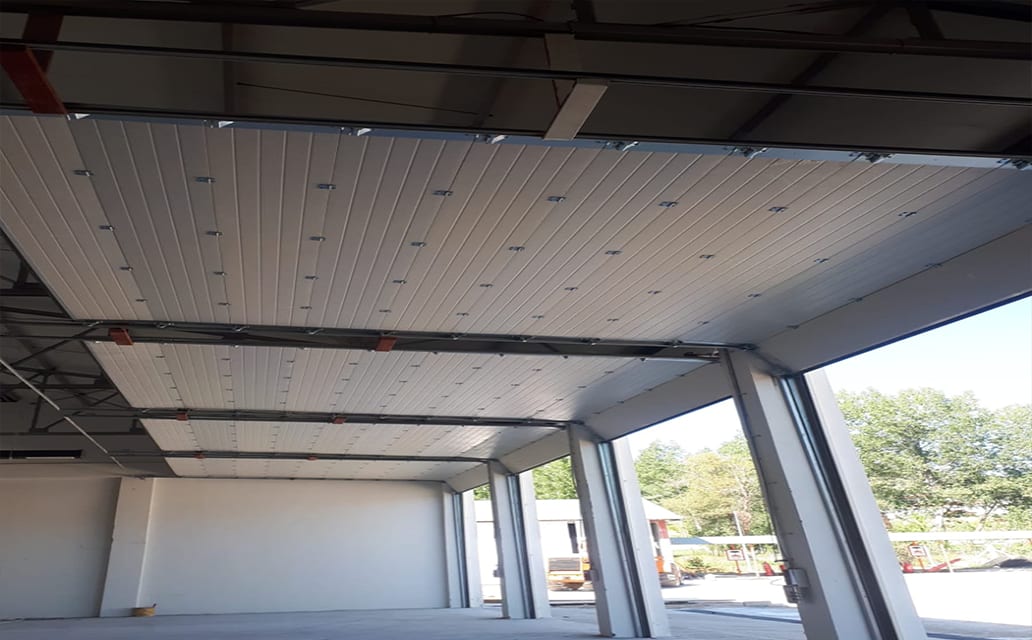
- The sectional door’s 40 mm sandwich panel provides R’w = 26 dB sound reduction — when the door closes, a substantial part of the line noise stays inside. In facilities where offices neighbour production, that value is the diplomat between two worlds.
- Even the choice between chain and belt on a garage motor is a sound decision: chain is durable but audible; belt is silent. It is no accident that the recommendation leans towards belt in projects with residences above.
Silence is not a comfort; it is communication infrastructure
The first casualty of a noisy environment is speech. Instructions are repeated louder, the radio message is asked for a second time, the warning tone goes unnoticed. There is a reason occupational safety literature takes noise seriously: sound consumes the budget of attention. Quiet equipment is bandwidth cleared so that the announcement, the alarm and the human voice can be heard.
Where is sound written into a design?
Soft start and stop parameters, seals that sit flush on the panel, balanced springs, properly aligned rails — none of these is sold under the name “silence package”; yet their sum defines the acoustic character of a facility. Sound is not a separate feature; it is a by-product of correct engineering.
You can request a quotation by sharing your facility’s noise sensitivity along with your dimensions and usage data — the decibel is a selection criterion too.